Managing brand ambassadors with spreadsheets and email breaks down fast.
At 10 ambassadors, it’s manageable. At 100? Chaos. At 1,000? Impossible.
The problem: Most brands try to scale ambassador programs manually, and it collapses. Tasks get lost. Content goes unapproved. Payments are delayed. Ambassadors disengage.
The solution: Ambassador management platforms that automate recruitment, onboarding, task tracking, content approval, payments, and analytics.
But here’s the challenge—not all platforms are built for the same purpose. Some focus on one-off influencer campaigns. Others specialize in long-term community activation.
In this guide, you’ll see:
- 8 top ambassador and community platforms compared
- Real pricing (no “contact sales” BS when we can avoid it)
- Which platform fits your brand’s goals
- Why community activation beats one-off influencer deals
Let’s start with the comparison table, then dive deep into each platform.
Quick Comparison: Best Ambassador Platforms 2026
| Platform | Best For | Community Focus |
|---|---|---|
| SocialLadder | DTC brands, campus programs, community activation | ⭐⭐⭐⭐⭐ |
| Aspire | Influencer + ambassador hybrid | ⭐⭐⭐ |
| GRIN | Ecommerce product seeding | ⭐⭐ |
| Club.co | Mobile-first gamification | ⭐⭐⭐⭐ |
| Brandbassador | Shopify/ecommerce | ⭐⭐ |
| CreatorIQ | Enterprise (Fortune 500) | ⭐⭐ |
| Circle.so | Membership communities (courses + events) | ⭐⭐⭐⭐ |
| Influitive | B2B customer advocacy | ⭐⭐⭐ |
Key insight: Platforms fall into three categories:
- Community activation (SocialLadder, Club.co, Circle.so) — ongoing relationships with ambassadors
- Influencer management (Aspire, GRIN, CreatorIQ) — campaign-based creator partnerships
- Hybrid (Brandbassador) — ecommerce-focused affiliate + ambassador mix
Why Community Activation Beats One-Off Influencer Deals
Before we compare platforms, let’s address the fundamental question: What’s better for your brand—ambassadors or influencers?
One-Off Influencer Campaigns
- Structure: Pay influencer → they post once → relationship ends
- Cost: $500-$50,000 per post (depending on follower count)
- Results: Temporary spike in awareness, limited long-term impact
- Trust: Followers know it’s paid advertising
Ongoing Ambassador Communities
- Structure: Recruit passionate fans → activate continuously → build relationships
- Cost: Product + commission or $100-500/month per ambassador
- Results: Sustained engagement, compound brand awareness, authentic advocacy
- Trust: Peer-to-peer recommendations (82% trust rate vs 15% for ads)
Industry data:
- Ambassador programs deliver 40-60% lower CAC than paid influencer campaigns
- Community members spend 5.2x more than regular customers
- 88% of people trust recommendations from people they know
- Influencer ROI is $5.78 per $1 spent, but ambassador ROI compounds over time
Bottom line: Influencers = renting attention. Ambassadors = owning relationships.
Now let’s look at the platforms that enable each approach.
The 8 Best Brand Ambassador Platforms (Detailed Breakdown)
#1: SocialLadder — Best for Community-Driven Ambassador Programs

Overview: SocialLadder is a community activation platform built specifically for DTC brands, campus programs, and brands that want ongoing relationships with ambassadors—not one-off influencer posts.
Used by brands like American Eagle, Kendra Scott, Bubble Beauty, Dormify, goPuff, and 500+ others, SocialLadder specializes in turning passionate customers into long-term brand advocates.
Key Philosophy: Community over campaigns. SocialLadder helps brands build movements, not just run marketing tactics.
Key Features:
- ✓ White-labeled ambassador portal (branded experience for your community)
- ✓ Discovery & recruitment tools (application forms, auto-approval, referral recruiting)
- ✓ Automated onboarding flows (welcome sequences, training materials, community guidelines)
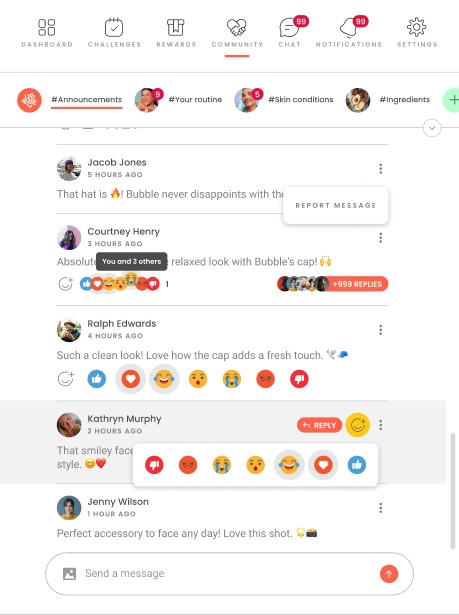
- ✓ Task-based campaigns (social posts, events, UGC, referrals, product reviews)
- ✓ Content approval workflows (review, approve, or request changes before posting)
- ✓ Integrated payment processing (commissions, bonuses, product credits)
- ✓ Event management (campus events, pop-ups, sampling activations)
- ✓ Real-time analytics (ROI tracking, engagement metrics, attribution)
- ✓ Mobile-optimized experience (ambassadors manage tasks via mobile-friendly portal)
- ✓ Custom challenge types (flexible campaign structures beyond just “post on Instagram”)
What Makes It Different: SocialLadder isn’t repurposed influencer software—it’s built from the ground up for ambassador programs and community activation.
The platform excels at:
- Campus programs (geo-targeting, event management, campus-specific analytics)
- Long-term relationships (not one-off posts, but sustained engagement)
- Community building (ambassador-to-ambassador connections, not just brand-to-ambassador)
- Flexible workflows (not locked into rigid campaign templates)
Best For:
- DTC & ecommerce brands
- College/campus ambassador programs
- Community-driven brands (beauty, fashion, lifestyle)
- Brands managing 50-5,000+ ambassadors
- Companies focused on authentic, long-term advocacy
Pros:
- Purpose-built for ambassador programs (not retrofitted influencer tool)
- Excellent for campus/college programs specifically
- Strong analytics and ROI attribution
- White-labeled experience (ambassadors feel like part of YOUR brand)
- Great customer support (high-touch onboarding)
- Flexible campaign types (beyond just social posts)
Cons:
- Not ideal if you only need influencer discovery (this is ambassador-focused)
- Custom pricing (not self-serve listed publicly)
- Requires commitment to building a program (not plug-and-play for one-off campaigns)
Real Results:
- Kendra Scott: 169% increase in social impressions, 104% increase in EMV per post, 200 Gems across 100 campuses
- goPuff: Created lowest-cost acquisition channel through campus ambassadors
- Bubble Beauty: Scaled from 100 to 1,000+ ambassadors in 18 months
G2 Rating: 4.6/5 ⭐⭐⭐⭐⭐
Who Should Choose SocialLadder: If you’re a DTC brand serious about building a long-term ambassador community—especially on college campuses—SocialLadder is purpose-built for you. It’s not the cheapest option, but it’s the best for sustained community activation.
Learn more about SocialLadder →
#2: Aspire — Best for Influencer + Ambassador Hybrid
Overview: Aspire (formerly AspireIQ) combines influencer discovery with ambassador management. Good middle ground for brands doing both one-off influencer campaigns and ongoing ambassador programs.
Aspire calls their approach “word-of-mouth commerce”—focusing on turning customers, influencers, and affiliates into advocates.
Key Features:
- ✓ Influencer discovery database (10M+ creators)
- ✓ Creator marketplace (inbound applications)
- ✓ Campaign management (briefs, contracts, deliverables)
- ✓ Content approval workflows
- ✓ Affiliate tracking and commission management
- ✓ Payment processing
- ✓ Reporting and analytics
- ✓ Shopify, WooCommerce, Meta, TikTok integrations
- ✓ UGC library for paid ads
Best For:
- Brands doing influencer marketing + ambassador programs
- Ecommerce brands
- Mid-market companies ($10M-100M revenue)
- Teams that need both discovery and management
Pros:
- Flexibility for both influencers and ambassadors
- Good ecommerce integrations (especially Shopify)
- Decent UI/UX (easier learning curve than CreatorIQ)
- Strong content management features
Cons:
- More influencer-focused than pure ambassadors
- Can get expensive as you scale ambassadors
- Less robust for campus-specific programs
- Annual contract lock-in
Best Use Case: If you’re running a mix of influencer campaigns (one-off posts from 10K-100K follower creators) and ongoing ambassador programs, Aspire gives you both in one platform.
G2 Rating: 4.4/5 ⭐⭐⭐⭐
#3: GRIN — Best for Ecommerce Product Seeding
Overview: GRIN is an influencer and creator management platform designed specifically for ecommerce brands. Strong on product seeding, affiliate tracking, and ecommerce integrations.
GRIN recently launched “Gia,” an AI agent for automating creator outreach and management.
Key Features:
- ✓ Creator discovery (search by product affinity, audience demographics)
- ✓ Product seeding automation (sync inventory, automate shipments)
- ✓ Campaign management
- ✓ Ecommerce integrations (Shopify, WooCommerce, Magento, BigCommerce)
- ✓ Affiliate tracking (unique codes, links, commission tiers)
- ✓ Payment processing
- ✓ Analytics and reporting
- ✓ UGC content library
Best For:
- Ecommerce brands (especially Shopify)
- Product-seeding campaigns
- Brands managing creators + ambassadors
- Companies focused on affiliate revenue
Pros:
- Strong ecommerce focus (built for online retailers)
- Excellent product seeding automation
- Good integrations with ecommerce platforms
- Solid affiliate tracking
Cons:
- Expensive for smaller brands ($2K/mo minimum)
- No free trial (demo-only)
- Less ideal for service-based businesses or campus programs
- More transactional (less community-focused)
Best Use Case: If you’re an established ecommerce brand ($5M+ revenue) and product seeding is core to your influencer strategy, GRIN’s automation can save significant time.
G2 Rating: 4.5/5 ⭐⭐⭐⭐⭐
#4: Club.co — Best for Mobile-First Gamification
Overview: Club.co is a mobile-first ambassador platform with heavy emphasis on gamification, missions, and tiered loyalty programs. Popular with European fashion and lifestyle brands.
Club’s unique angle is the mobile app experience—ambassadors download your branded app and complete missions for rewards.
Key Features:
- ✓ Branded mobile app (iOS + Android)
- ✓ Mission-based campaigns (100+ ready-to-go templates)
- ✓ Gamification & tiered clubs (segment ambassadors by performance)
- ✓ Push notifications (activate ambassadors directly on their phones)
- ✓ Discount code engine (automatic code generation and tracking)
- ✓ Tracking links (affiliate attribution)
- ✓ Automated rewards and payments
- ✓ Product seeding automation
- ✓ Community wall (ambassador-to-ambassador communication)
- ✓ Shopify integration
Best For:
- Fashion, beauty, and lifestyle brands
- Brands targeting Gen Z (mobile-first audience)
- European brands (Club is based in Norway)
- Companies wanting gamified ambassador experiences
Pros:
- Mobile-first experience (ambassadors love the app)
- Strong gamification (missions, points, tiers)
- Good for product-based brands
- Active in European market
Cons:
- Less robust analytics than SocialLadder or GRIN
- Primarily product-seeding focused (less for service brands)
- Smaller user base in US market
- No public pricing transparency
Best Use Case: If you’re a fashion or lifestyle brand targeting mobile-savvy Gen Z ambassadors and want a gamified experience, Club.co delivers strong mobile engagement.
Who Uses It: Celsius, Missguided, Daniel Wellington, Huel, Fabletics
#5: Brandbassador — Best for Shopify Brands
Overview: Brandbassador is an ambassador platform built specifically for ecommerce and Shopify brands. Easy setup, affordable pricing, mission-based approach.
Key Features:
- ✓ Shopify native integration (one-click setup)
- ✓ Automated referral tracking
- ✓ Mission-based campaigns (social posts, referrals, reviews)
- ✓ Product seeding
- ✓ Social media tracking (auto-detect posts)
- ✓ Tiered ambassador programs
- ✓ Commission management
- ✓ Basic analytics
Best For:
- Shopify stores
- Ecommerce startups and SMBs
- Product-based businesses
- Brands wanting easy, affordable entry into ambassador marketing
Pros:
- Easy Shopify integration (literally one click)
- Affordable entry point ($500/mo)
- Simple UI for beginners
- No annual contract required
Cons:
- Limited for non-ecommerce brands
- Less robust analytics vs SocialLadder/GRIN
- Primarily product-seeding focused
- Basic reporting capabilities
Best Use Case: If you’re a Shopify store with <$5M revenue and want an affordable, easy-to-use ambassador platform, Brandbassador is a solid entry point.
G2 Rating: 4.2/5 ⭐⭐⭐⭐
#6: CreatorIQ — Best for Enterprise Brands
Overview: CreatorIQ is an enterprise-grade influencer and creator management platform used by Fortune 500 brands like Unilever, Disney, CVS, and Samsung.
This is NOT a platform for SMBs—it’s built for massive organizations with complex compliance needs, legal requirements, and influencer programs at scale.
Key Features:
- ✓ Massive creator database (10M+ creators globally)
- ✓ AI-powered discovery and vetting
- ✓ Influencer relationship management (IRM)
- ✓ Campaign management and tracking
- ✓ Advanced fraud detection
- ✓ Enterprise-grade security and compliance (SOC 2, GDPR)
- ✓ Multi-brand/multi-region support
- ✓ API access for custom integrations
- ✓ Dedicated customer success team
Best For:
- Enterprise brands ($100M+ revenue)
- Fortune 500 companies
- Regulated industries (beauty, pharma, finance)
- Brands running influencer + ambassador programs globally
Pros:
- Powerful for enterprise-scale programs
- Strong fraud detection and compliance
- Comprehensive creator database
- White-glove customer success
Cons:
- Extremely expensive (SMBs need not apply)
- Overkill for pure ambassador programs (more influencer-focused)
- Steep learning curve
- Long sales cycles
Best Use Case: If you’re a Fortune 500 brand managing hundreds of influencer campaigns across multiple regions with strict compliance requirements, CreatorIQ is built for you.
G2 Rating: 4.3/5 ⭐⭐⭐⭐
#7: Circle.so — Best for Membership Communities (Different Category)
Overview: Circle.so is NOT a traditional ambassador platform—it’s a community platform for membership sites, online courses, and paid communities.
Important distinction: Circle is for creators and brands building membership communities (like Patreon or Kajabi), not for managing ambassador marketing programs.
However, some brands use Circle to build community around their ambassadors or customers, so we’re including it for context.
Key Features:
- ✓ Community spaces (discussions, posts, events)
- ✓ Online course hosting
- ✓ Live streaming and events
- ✓ Membership tiers and paywalls
- ✓ Email marketing (Email Hub)
- ✓ Landing pages and websites
- ✓ Payment processing (one-time or recurring)
- ✓ Mobile app (iOS + Android, on Plus plan)
- ✓ Integrations (Stripe, Zapier, Teachable)
Best For:
- Course creators
- Membership site owners
- Brands building paid communities
- Coaches and educators
Pros:
- Beautiful, clean interface
- All-in-one (community + courses + email + website)
- Affordable entry point ($89/mo)
- Strong community engagement features
Cons:
- NOT built for ambassador management (different use case)
- No product seeding, affiliate tracking, or ambassador-specific workflows
- Transaction fees add up
- Mobile app requires $30K/year Plus plan
Why It’s Different: Circle is for building communities where members pay YOU. Ambassador platforms are for activating people to market FOR you.
Best Use Case: If you’re building a paid membership community (like a course platform or coaching program), Circle is excellent. But if you need to manage brand ambassadors, use SocialLadder, Aspire, or GRIN instead.
G2 Rating: 4.5/5 ⭐⭐⭐⭐⭐
#8: Influitive — Best for B2B Customer Advocacy
Overview: Influitive focuses on B2B customer advocacy and ambassador programs. Different angle than consumer brand platforms—this is for SaaS companies, B2B vendors, and enterprise software.
Key Features:
- ✓ Advocate challenge campaigns
- ✓ Referral tracking
- ✓ Case study generation
- ✓ Review management (G2, Capterra, TrustRadius)
- ✓ Product feedback collection
- ✓ B2B-specific workflows
- ✓ Integration with Salesforce, HubSpot, Marketo
Best For:
- B2B SaaS companies
- Enterprise software vendors
- Customer advocacy programs
- Employee advocacy
Pros:
- Built specifically for B2B (not consumer brands)
- Good customer advocacy features
- Strong for generating case studies and reviews
Cons:
- Not for consumer brands
- Expensive
- Different use case than DTC ambassadors
Best Use Case: If you’re a B2B SaaS company wanting to activate customers as advocates (referrals, reviews, case studies), Influitive is purpose-built for that.
G2 Rating: 4.5/5 ⭐⭐⭐⭐⭐
How to Choose the Right Platform for Your Brand
After evaluating hundreds of ambassador programs and analyzing what actually drives results, here’s our honest recommendation:
For 80% of brands reading this guide, SocialLadder is the right choice.
Here’s why—and when you might be in the 20% that should consider alternatives.
Key Questions to Ask Before Choosing
1. What’s your ambassador count goal?
- <100
- 100-1,000
- 1,000-10,000
2. What’s your budget?
3. Are you DTC, retail, B2B, or ecommerce?
- DTC/Retail
- Ecommerce
- B2B
4. Do you need campus-specific features?
- Yes
- No
5. Do you need influencer discovery or just ambassador management?
- Influencer discovery
- Ambassador management
6. One-off campaigns or ongoing community?
Why SocialLadder Works for Most Brands
If you’re a DTC brand, retail company, or consumer brand serious about building a long-term ambassador community, SocialLadder is purpose-built for exactly this.
What makes it different:
1. Community-first architecture Unlike platforms retrofitted from influencer tools, SocialLadder was designed from day one for ongoing ambassador relationships. You’re not forcing a campaign tool to do community work—you’re using software built for sustained engagement.
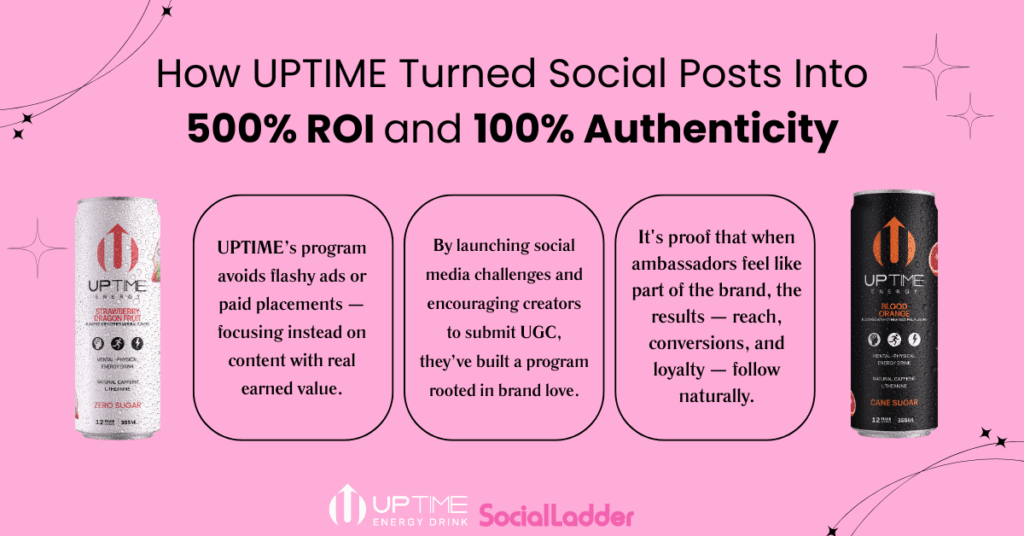
2. Campus program expertise If your target audience includes college students or young adults, SocialLadder’s campus-specific features (geo-targeting, event management, campus analytics) are unmatched. Brands like American Eagle, Olive and June, and UPTIME Energy chose SocialLadder specifically for this reason.
3. Proven ROI at scale Real results from real brands:
- Kendra Scott: 169% increase in social impressions, 200 ambassadors across 100 campuses
- goPuff: Lowest-cost acquisition channel across entire marketing mix
- Bubble Beauty: Scaled from 100 to 1,000+ ambassadors in 18 months
4. Flexibility without complexity You get enterprise-grade features (white-label portal, custom workflows, advanced analytics) without enterprise-grade complexity. Teams of 1-2 people can manage 500+ ambassadors effectively.
5. True partnership approach High-touch onboarding, responsive support, and strategic guidance—not just software licensing. SocialLadder’s team has built hundreds of successful programs and brings that expertise to yours.
Bottom line: If you want to build a community activation engine that compounds over time rather than rent attention through one-off campaigns, SocialLadder is built for that exact use case.
When to Consider Alternatives
That said, there are specific situations where other platforms might be a better fit. Here’s when:
You’re running primarily one-off influencer campaigns (not ongoing ambassadors): → Aspire or GRIN
If 80% of your creator budget goes to one-time sponsored posts with 10K-100K follower influencers, and only 20% to ongoing ambassadors, you need influencer discovery more than community management.
Aspire and GRIN excel at finding creators, managing campaign briefs, and tracking one-off deliverables. They CAN handle ambassadors, but they’re optimized for influencer campaigns.
Trade-off: You get better influencer discovery but less robust community features.
You’re a pure ecommerce play and product seeding is 90% of your strategy: → GRIN or Brandbassador
If your entire program is “send product → ambassadors post → track affiliate sales” with minimal community building, event management, or campus focus, GRIN’s product seeding automation is best-in-class.
Brandbassador offers a more affordable version of this for Shopify stores specifically.
Trade-off: Strong ecommerce features but weaker on community engagement, events, and non-transactional relationships.
You’re Fortune 500 with complex compliance needs: → CreatorIQ
If you’re a massive enterprise with legal teams, compliance requirements, multi-region programs, and budgets measured in millions, CreatorIQ’s enterprise infrastructure might be necessary.
But be honest about whether you actually need this. Most brands don’t. CreatorIQ is built for Disney, Unilever, CVS—not for $5M-50M revenue brands.
Trade-off: Enterprise security and scale, but $30K-100K/year cost and steep learning curve.
You want mobile-first gamification and you’re in Europe: → Club.co
If you’re a European fashion/lifestyle brand and gamification (points, tiers, missions) is core to your ambassador experience, Club.co’s mobile app is strong.
Trade-off: Less robust analytics and US market presence compared to SocialLadder.
You’re building a paid membership community (not managing ambassadors): → Circle.so
Important distinction: If you’re a creator/coach building a paid community where members pay YOU for access to content, courses, and events, Circle is excellent.
But that’s not ambassador management—that’s membership site software. Different use case entirely.
Trade-off: Not built for ambassador programs at all.
You’re B2B SaaS focused on customer advocacy: → Influitive
If you’re a B2B software company wanting customers to write case studies, leave G2 reviews, and refer other companies, Influitive’s customer advocacy workflow is purpose-built for this.
Trade-off: Not designed for consumer brands or DTC ambassador programs.
Our Recommendation: Start with SocialLadder
Here’s why this is the smart move:
You can always add influencer tools later. If you build a strong ambassador community with SocialLadder and later decide you also want one-off influencer campaigns, you can add Aspire for that. But you can’t easily retrofit an influencer tool into a community platform.
Community compounds, campaigns don’t. A well-run ambassador program on SocialLadder gets MORE valuable over time as relationships deepen and ambassadors become genuine advocates. One-off influencer campaigns reset to zero after each post.
The ROI math works. At $1,500-2,000/month, SocialLadder pays for itself with 5-10 incremental deals per month. Most brands hit that within 60-90 days.
Real brands validate this. American Eagle, Kendra Scott, Bubble, Dormify, goPuff—all chose SocialLadder over alternatives for a reason. They compared platforms and chose community over campaigns.
Frequently Asked Questions
What’s the difference between an ambassador platform and influencer platform?
Ambassador platforms focus on managing ongoing relationships with many micro-influencers/brand fans (often 100s-1,000s) through structured programs. Influencer platforms focus on discovering and managing one-off campaigns with larger influencers.
Ambassador programs:
- Ongoing relationships (6-12+ months)
- Many people (100-5,000 ambassadors)
- Lower cost per person ($0-500/month each)
- Focus: sustained engagement, community building
- Platforms: SocialLadder, Club.co, Brandbassador
Influencer campaigns:
- One-off posts (single campaign)
- Fewer people (5-50 influencers per campaign)
- Higher cost per person ($500-50,000 per post)
- Focus: reach, impressions, temporary awareness
- Platforms: AspireIQ, GRIN, CreatorIQ
How much do brand ambassador platforms cost?
Pricing varies widely based on features, ambassador count, and platform:
Most platforms charge based on:
- Ambassador count (more ambassadors = higher price)
- Features included (analytics, integrations, support)
- Contract length (annual vs monthly)
Do I need a platform to run an ambassador program?
Not if you have fewer than 50 ambassadors. Spreadsheets, Slack, and manual tracking work fine at small scale.
When you NEED a platform:
- Managing 50+ ambassadors (manual tracking breaks down)
- Running multiple campaigns simultaneously
- Need ROI attribution and analytics
- Want to scale to 100s or 1,000s of ambassadors
- Need automated workflows (onboarding, tasks, payments)
When you DON’T need a platform:
- <20 ambassadors
- One-off campaigns
- Very limited budget (<$500/month)
Can I manage ambassadors with Shopify alone?
Shopify has basic affiliate features but isn’t built for ambassador management. You’d still need to manually handle:
- Recruitment and applications
- Onboarding and training
- Task assignment and tracking
- Content approval
- Communication and community building
- Reporting and analytics
Platforms like Brandbassador, GRIN, and SocialLadder integrate WITH Shopify but add the management layer Shopify lacks.
Which platform is best for college ambassador programs?
SocialLadder is purpose-built for campus programs and used by brands like American Eagle, Kendra Scott, Bubble.
Campus-specific features include:
- Geo-targeting by campus
- Event management (in-person campus events)
- Campus-specific analytics
- Recruitment tools for students
- Mobile-first experience
Other platforms (Aspire, GRIN, Brandbassador) CAN be used for campus programs but lack campus-specific features.
What’s the ROI of using an ambassador platform?
Ambassador platforms typically pay for themselves through:
Time savings:
- 10-20 hours/week saved on manual management
- Automated workflows vs spreadsheets/email
Higher conversion:
- Better tracking = better optimization
- Attribution = proof of ROI
Scalability:
- Manage 10x more ambassadors with same headcount
- Unlock revenue impossible to achieve manually
Real benchmarks:
- Ambassador programs: 40-60% lower CAC vs paid ads
- Community members: 5.2x higher spending than regular customers
- Platforms: ROI positive within 3-6 months
Example:
- $2,000/month platform cost
- 200 ambassadors
- Each drives 2 sales/month average
- $100 average order value
- = $40,000 in attributed revenue
- ROI: 20x
Can small brands afford ambassador platforms?
Yes! Several platforms cater to SMBs:
Budget strategy:
- Start with 50-100 ambassadors
- Prove ROI over 90 days
- Scale based on results
The time savings alone often justifies the cost—managing 100 ambassadors manually requires 15-20 hours/week. At $25/hour labor cost, that’s $1,500-2,000/month in time.
What software do Bubble Beauty and American Eagle use?
American Eagle and Bubble Beauty uses SocialLadder to manage their community.
The Verdict: Which Platform Should You Choose?
After comparing 8 platforms, here’s our honest recommendation:
For most DTC brands serious about building long-term community: → SocialLadder
Why: Purpose-built for ambassador programs (not repurposed influencer tool), excellent for campus programs, strong analytics, community-first approach.
Community Activation > One-Off Influencer Deals
Throughout this comparison, one pattern emerges clearly:
Platforms built for community (SocialLadder) consistently outperform transactional influencer platforms for long-term brand building.
Why?
- Trust compounds: Ongoing ambassador relationships build authentic advocacy
- Cost efficiency: Community members cost less than influencers per impression
- Sustainability: One-off influencer posts fade; community engagement compounds
- Data: Long-term programs generate insights impossible from single campaigns
The data supports this:
- 82% of people trust peer recommendations
- Community members spend 5.2x more than regular customers
- Ambassador programs: 40-60% lower CAC than influencer campaigns
Ready to Build Your Ambassador Community?

You’ve seen how top brands structure their programs. You understand the platforms. You know the ROI.
Now it’s time to build yours.
Here’s what to do next:
- Assess your goals: Community building or one-off campaigns?
- Estimate ambassador count: 50? 200? 1,000+?
- Check budget: $500/month? $2,000/month? $5,000+/month?
- Choose platform: Based on the comparison above
- Request demos: See 2-3 platforms before deciding
Want to see how SocialLadder compares to your specific needs?
Book a demo to discuss:
- Your ambassador program goals
- Expected ambassador count
- Integration requirements
- Custom pricing for your situation
- Real case studies from brands like yours
Book a Free Demo with SocialLadder →
Related Resources:
- Student Ambassador Program Examples 2026
- Best Campus Ambassador Programs 2026
- American Eagle Creator Program Deep Dive
Download our free guide: Building a Successful Ambassador Community